

With over 5 years of experience as a Web Designer/Developer, I create intuitive, accessible, and visually engaging digital experiences by transforming complex ideas into user-friendly interfaces through strong design principles and keen attention to detail.
7/09/2026
These days, almost anyone can ask an AI tool to create a website. Within minutes, it can suggest a layout, write some content and even generate code.
That is impressive. But after working in web design and development for more than five years, I have learned something important: creating a website quickly is not the same as creating the right website.
A good website must do more than look beautiful. It must be easy to use. It must explain the business clearly. It must work well on mobile phones, load quickly and guide visitors towards taking action.
AI can help with all these things, but it still needs a human being to give it direction.
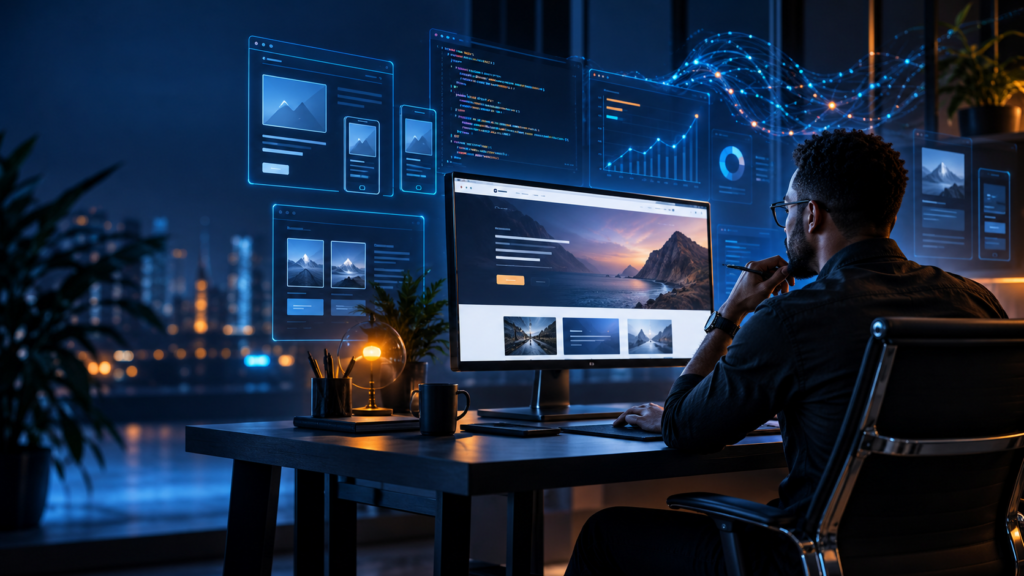
Before AI became part of my workflow, many web design tasks took much longer. I had to spend hours researching ideas, planning page layouts, writing sample content, fixing code and testing different solutions.
I still do those things, but AI helps me get to a strong starting point faster.
For example, I can use AI to organise a client’s ideas, suggest different page structures or create several headline options. It can help me draft custom CSS, understand an error message or think of questions that a website visitor may have.
This saves time, but I do not simply copy everything AI gives me.
Sometimes a suggested design looks good but puts the most important button in the wrong place. Sometimes the content sounds professional but feels empty and generic. Sometimes a piece of code works on its own but causes problems when added to WordPress.
That is where experience matters.
AI helps me create more options. My job is to know which option will actually help the client.
One of the biggest lessons I have learned is that a website is not just something people look at. It is a tool that should help a business work better.
I saw this clearly while working on an online learning platform. The job was not only to design a nice homepage in Elementor. Students needed to register, make payments, find their courses, receive emails and move around the platform without getting confused.
The platform attracted more than 700 users within two months.
That result came from many small decisions working together. The message had to be clear. Registration had to be simple. The platform had to work well on mobile devices. The learning dashboard had to make sense, and the different WordPress tools had to work together properly.
AI could help me think through each part, but it could not understand the whole project in the same way I did. It did not speak with the client, understand the users or take responsibility when something went wrong.
That responsibility was mine.
Clients often have many ideas but are not sure how to organise them. AI can help me group those ideas and turn them into a clearer plan. This gives me more time to focus on the right questions: Who is the website for? What do visitors need? What action should they take?
The first idea is not always the best one. With AI, I can explore different headlines, layouts and content sections before I start building. I then choose and improve the ideas that fit the brand and its audience.
A website may look great and still fail because the message is unclear. AI can help me create different versions of a headline or explain a service in simpler words. However, I still edit the final content so it sounds natural and reflects the real business.
AI is helpful when I need a starting point for custom code or when I am trying to understand a technical error. But generated code must be tested. I check whether it is secure, responsive and suitable for the website before using it.
AI can suggest keywords, titles, meta descriptions and content ideas. These are useful for search engine optimisation, but good SEO is not about placing the same keyword everywhere. It is about creating a fast, helpful and well-organised website that answers real questions.
The more I use AI, the more I understand the value of the human side of web design.
Website visitors are real people. Some are in a hurry. Some are unsure whether they can trust the business. Some are using slow internet or a small mobile screen. A good designer thinks about these situations and makes the experience easier for everyone.
A design that works for a large international company may not work for a small Nigerian business. Customers may use different payment methods. Internet speed may be slower. The business may have a smaller team and need a website that is easy to manage.
AI can make suggestions, but a designer must understand the client’s real situation.
AI can create many ideas very quickly. The difficult part is knowing what not to use.
Does the page really need another animation? Is the large image making the website slow? Is that extra section helping the visitor, or is it only making the page longer?
Good design is not about adding everything. It is about keeping what is useful.
If a contact form stops working or a checkout becomes confusing, the client cannot ask an AI prompt to take responsibility. A professional designer must test the website, explain important choices and fix problems when they appear.
I have launched websites, and every project has taught me that design decisions should have a reason behind them.
If AI can create ten layouts in a few seconds, my value is not simply creating an eleventh layout. My value is choosing the right direction and explaining why it will work.
If AI can generate code, my value is knowing whether that code belongs in the website and whether it will cause problems later.
If AI can write a page, my value is making sure the words sound like the business and connect with the people reading them.
This is the approach I bring to my work. I build responsive, SEO-friendly and conversion-focused websites. I want each website to do a real job, whether that means helping a company get enquiries, sell products, teach students or build trust.
I also pay close attention to website speed. Some of the websites I have delivered load in under three seconds. This is not only a technical achievement. A faster website gives visitors a better experience and makes it less likely that they will leave before seeing what the business offers.
I do not think web designers should ignore AI, and I do not think we should depend on it completely.
Designers who learn how to use AI well will be able to work faster and explore more ideas. But the strongest designers will also keep improving the basic skills that matter: communication, design, user experience, SEO, accessibility, coding, problem-solving and business understanding.
Knowing how to write a good prompt is useful. Knowing when the answer is wrong is even more useful.
The future of web design is not humans fighting against AI. It is skilled people using AI to do better work.
AI is making it easier to create a website. But businesses do not just need websites. They need websites that solve problems.
They need someone who can understand their goals, organise their ideas and create an experience that makes sense to their customers. They need someone who can balance beauty with speed, creativity with usability and new technology with common sense.
AI is a powerful tool in my web design process, and I am excited about what it allows me to do. But the tool does not make the final decision.
That is still my job and it is the part of the work I enjoy most.

The future of web development isn’t a battle of human versus machine. It’s the ultimate collaboration. By embracing AI as our partner, we unlock the ability to create digital experiences that are not only technologically advanced but also intuitive, inclusive, and truly resonant with the people they are built to serve.
Ready to build the next generation of your digital presence? Let’s connect and discuss how we can architect a smarter, more engaging website for your business.
Ready to elevate your brand? I specialise increating stunning digital experiences that captivate and engage. Let’s bring your vision to life!

© ACES 2025